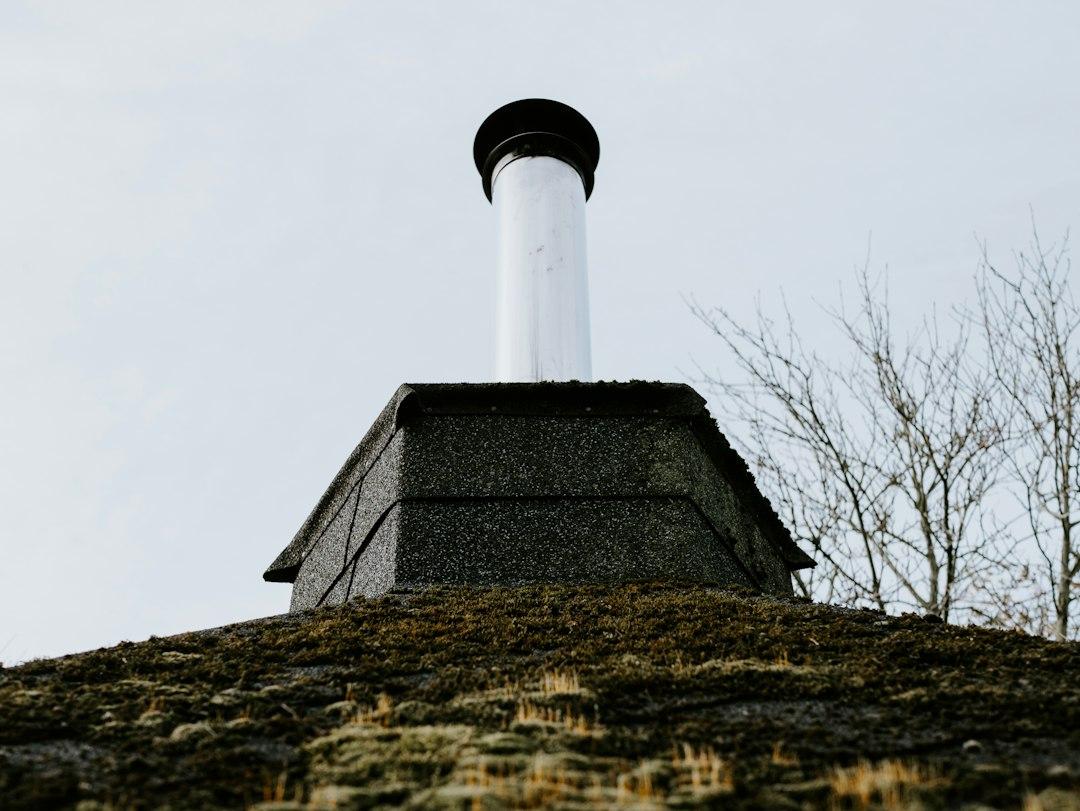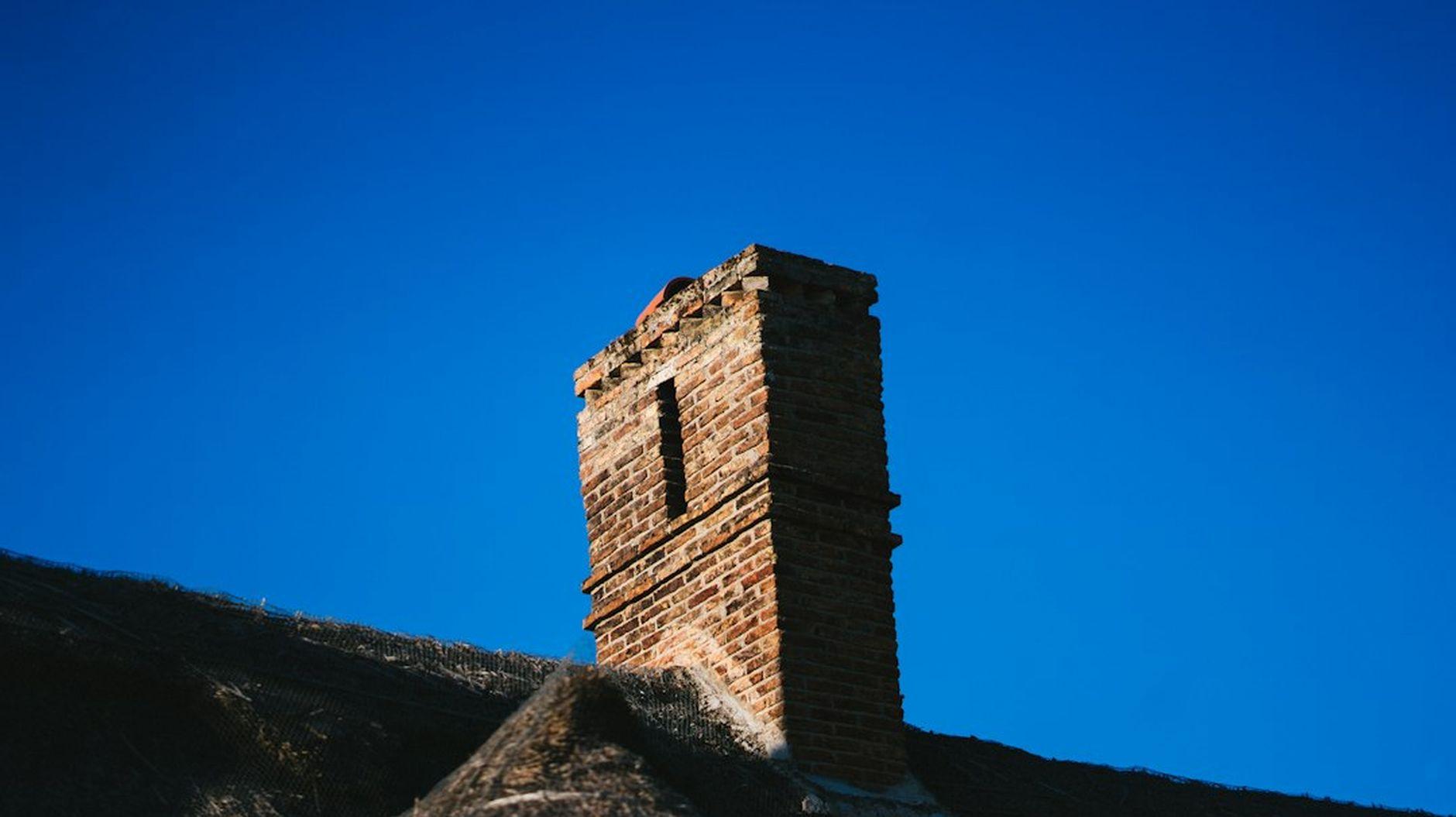
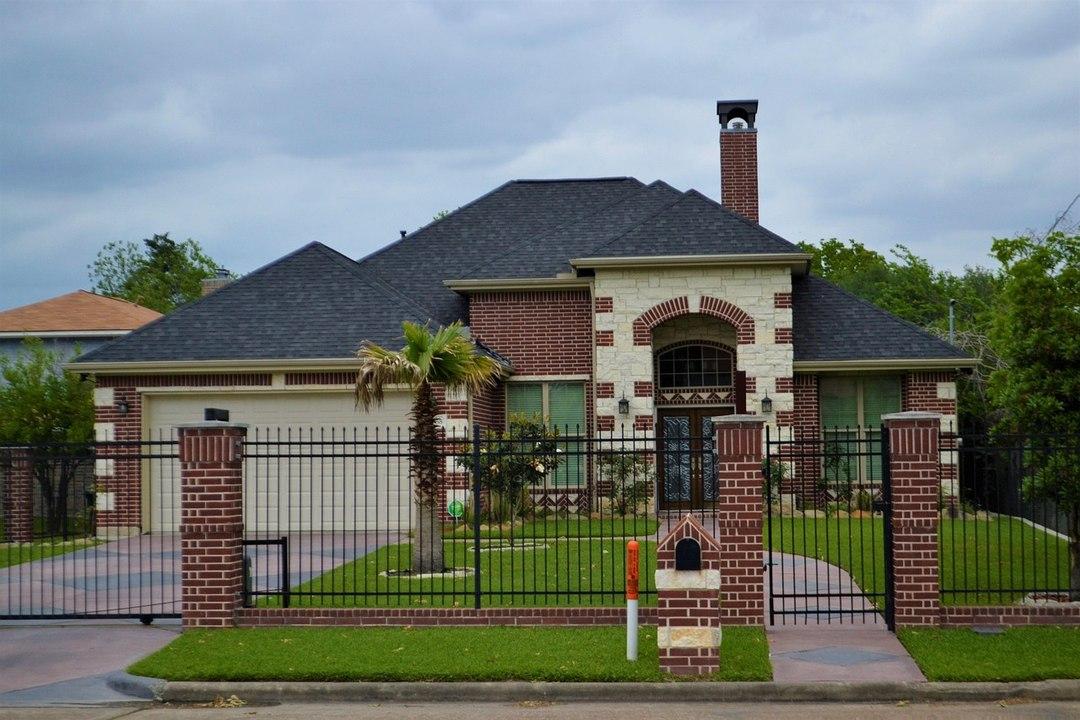
When a ceiling stain appears near the fireplace, most owners call a roofer first. It makes sense: the water is coming from above, and the roof is the obvious suspect. Sometimes the roofer is the right person. Often, though, the problem sits in the chimney itself, and a roof crew without masonry experience will seal the flashing, bill for it and leave the real entry point untouched. This post is for Pico Rivera owners trying to decide who to hire.
The question to answer first
Before choosing a trade, work out roughly where the water is entering. That does not need tools, only a few observations from inside the house and the yard:
- Does the stain sit right beside the chimney, or several feet away from it?
- Does it show up with every rain, or only with long, heavy storms?
- Is there water or rust in the firebox itself?
- Does the brick face above the roof look patchy, flaky or dark compared with the rest?
- Is there a cap on top of the chimney?
A stain several feet from the chimney, appearing with every rain, points toward the roof. Water in the firebox, a missing cap, or crumbling brick above the roofline point toward the chimney. A stain right against the chimney wall could be either, and that is the case where the choice of trade matters most.
What a roofer is good at
A roofing contractor knows shingles, tile, underlayment and decking. If the leak comes from a broken shingle, a failed valley or worn underlayment near the chimney, a roofer is the right call. Roofers also replace flashing as part of a re-roof, and a good one does it well.
What most roofers do not do is masonry. They will not usually rebuild a crown, repoint joints, replace spalled brick or fit a flue cap. When they find a leak at the chimney, the standard roofing answer is more sealant on the flashing. That can hold for a while, but if the water is actually coming through the crown or the brick, the sealant just moves the stain.
What a chimney company is good at
A chimney company works on the stack from the crown down. That includes:
- caps fitted to the flue
- crowns sealed or recast
- mortar joints repointed and damaged bricks replaced
- flashing cut into the brick and sealed properly
- crickets built behind wide stacks
- water repellent on sound masonry
Because the job is the chimney rather than the roof, the inspection covers the inside of the flue and the attic beside the stack as well. Water that soaks in through the crown often runs down the inside of the chimney before it shows up in the house, and that path is only visible from inside the flue or the attic.
When you need both
On some houses the leak has more than one source: a failed roof valley near the chimney and a cracked crown, for example. Or the roofing around the stack is so worn that new flashing cannot be fitted without new shingles. In those cases we tell you plainly which part is ours and which belongs to a roofer, and we can work around their schedule so the flashing and roofing go back together.
What hiring us costs
Our leak repair range is $575 to $3,450, depending on how many places water is getting in and how much has to be rebuilt. A cricket runs $460 to $1,035, or $690 to $1,700 when the metal around the stack is replaced at the same time. A cap on its own is quoted after we measure. If the leak is part of a wider question, such as a sale, our Level 2 inspection with a camera run through the flue is $400.
The written quote we leave lists each entry point, the repair for each, and the price. If we think the roof rather than the chimney is the problem, the quote says that too, and you are free to take it to a roofer.
Tell us where the stain is and what you noticed outside, and we will plan the visit
Questions to ask whoever you hire
Whether you call a roofer or a chimney company, these questions separate a proper diagnosis from a guess:
- Will you go into the attic as well as onto the roof?
- Will you look at the crown and the cap, or just the flashing?
- Can you show me photos of where the water is getting in?
- Is your fix a repair to the failed part or a sealant over the top?
- If the first repair does not stop the leak, what happens next?
A contractor who quotes without going up the ladder, or who offers only sealant, is guessing. So is one who cannot show you the gap they plan to close.
Signs you hired the wrong trade
Owners often come to us after one round of repairs that did not work. The pattern is familiar:
- fresh tar on the flashing, but the stain is still growing
- new shingles around the chimney, and water still in the firebox
- a sprayed sealer on the brick that turned it shiny, with the leak unchanged
Each of those is a fix aimed at the wrong part. In every case the second visit costs more than getting it right first.
Pico Rivera houses
Pico Rivera and the surrounding cities have plenty of mid-century houses with brick chimneys that have now been through decades of winter storms. Their crowns were often thin to begin with, and the original flashing has usually been patched more than once. When water appears, it pays to have the chimney itself looked at before anyone reaches for the sealant gun. Our leak repair page describes the visit in more detail, and masonry repair covers the brick and mortar work.
For a look at the full price range for this kind of job, see what a chimney leak repair costs. To arrange a visit, the contact page is the place to start.
Found a Stain You Cannot Place?
Clement Chimney Care follows it from the room to the roofline, photographs the gap letting water in and puts a written price on the fix. Ask from Pico Rivera, Whittier, Rosemead or a town nearby.